
When one path becomes impossible, another can still be found.
The mission remains.
Only the path changes.
About BelliranER
My journey as an artist began in early childhood, when my grandfather taught me to draw nature and landscapes with graphite and charcoal. Art was my first language — a place where emotion, imagination, and survival intertwined long before I understood the meaning of any of them. Through my teenage years, creativity expanded into writing, poetry, music, and composition, shaping the core of who I believed I was meant to become.
Yet beneath every artistic pursuit was something even older. From childhood, my deepest aspiration was never simply to create, but to help others. Whether through medicine, art, or any other path life would allow, I was always searching for a way to lessen suffering and offer hope where I could.
At twenty-four, medical malpractice led to a rare bone disease that crushed my spine and changed everything. I lost fine motor function in my hands, and with it my ability to draw, paint, or play music. For nearly a decade, I believed my artistic life had ended. What I did not yet understand was that it was not ending — it was transforming.
Before my illness, I worked in Emergency Medicine as a medic, ambulance driver, dispatcher, and shift officer. My purpose was to help people survive — sometimes through direct care, sometimes by guiding frightened callers through CPR or childbirth until help arrived. When that path became impossible, I believed my life's mission had ended as well.
Years later, I found my way back through digital creation. Technology became not just a tool, but a bridge — allowing me to reconnect with the part of myself I thought was lost. More importantly, it revealed something I had never fully understood: although one path had disappeared, my purpose had not. Through adaptation and persistence, I discovered another way to continue the same lifelong mission — helping others endure through art.
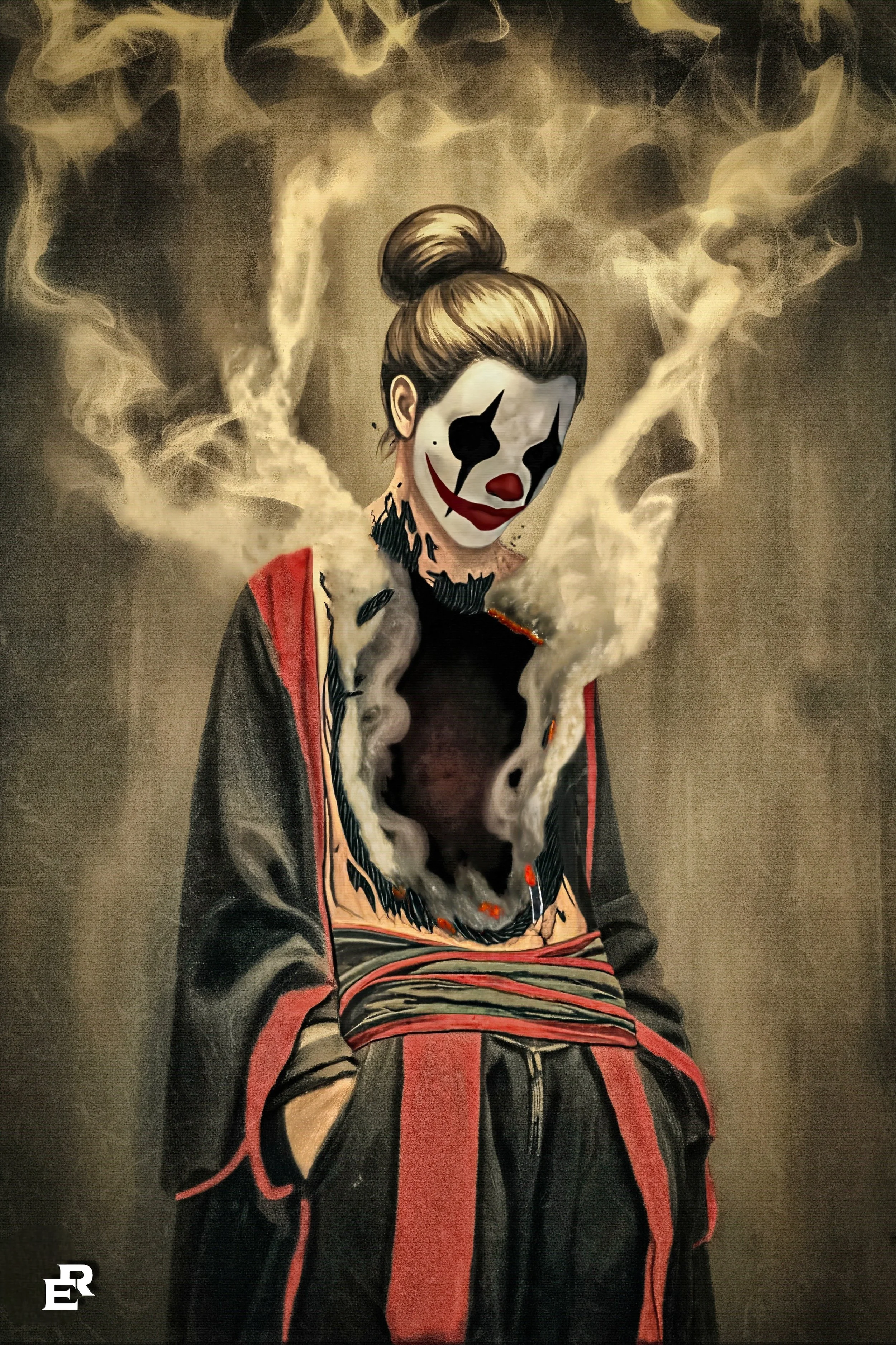
Today, my work exists at the intersection of digital drawing, painting, photography, and poetic writing. Each piece begins not with technique, but with emotion. My life — marked by near-fatal asthma attacks and resuscitations, physical limitation, and continuous recovery — is not separate from my art, but embedded within it. My work is both a response and a continuation: a form of emotional translation, reflection, and endurance.
From this process, I gradually developed a personal visual language I define as Poetic Existential Visualism — an approach that merges philosophical inquiry, emotional memory, and symbolic imagery into a unified form of expression, accompanied by poetic writing that offers a glimpse into the emotional and existential landscape from which each work emerged. It is not simply a style, but a way of understanding, questioning, and translating lived experience into visual and poetic form.
My creative process always begins with writing. I record emotions, memories, and internal states, refining them into poetic text that becomes the voice of each artwork. Only after the emotional truth is clear do I begin the visual creation.
Some works emerge in a single moment of clarity; others require time, distance, and emotional readiness. When the weight becomes too heavy, I pause — because honesty, not speed, defines my process. My partner, whose love, artistic insight, and honest critique helped guide me back to art, remains one of the most meaningful influences in my creative journey.
Though I searched for it, I never found a role model whose life reflected my own reality — someone who could show me that even after everything changes, life can still continue with meaning. Over time, I realized that my work was becoming an attempt to offer that possibility to someone else. One of my deepest intentions is to become the kind of presence I once needed. I create not only to express, but to reach those navigating physical, emotional, or life-altering challenges, reminding them that their story does not have to end where their previous path did.
The philosophy that quietly shaped my life long before it shaped my art is simple:
When one path disappears or becomes impossible, another can still be found.
That belief carried me from medicine to art, from despair to purpose, and continues to shape every work I create.
I do not believe healing is a return to who we once were. The past cannot be reconstructed. What can be created is something new — a life, a voice, and a self shaped by everything that came before, yet no longer defined by it.
I see myself at the beginning of this renewed path. Returning to art after losing it for thirteen years was only the first milestone. What follows — exhibitions, dialogue, and the continued unfolding of Poetic Existential Visualism — is part of a journey still being lived.
If even one person encounters my work at a moment they need it most, recognizes a part of themselves within it, and finds the strength to continue, then my work has fulfilled its purpose.
My art is my story.
More importantly, it is an invitation for others to discover that their own story can continue as well
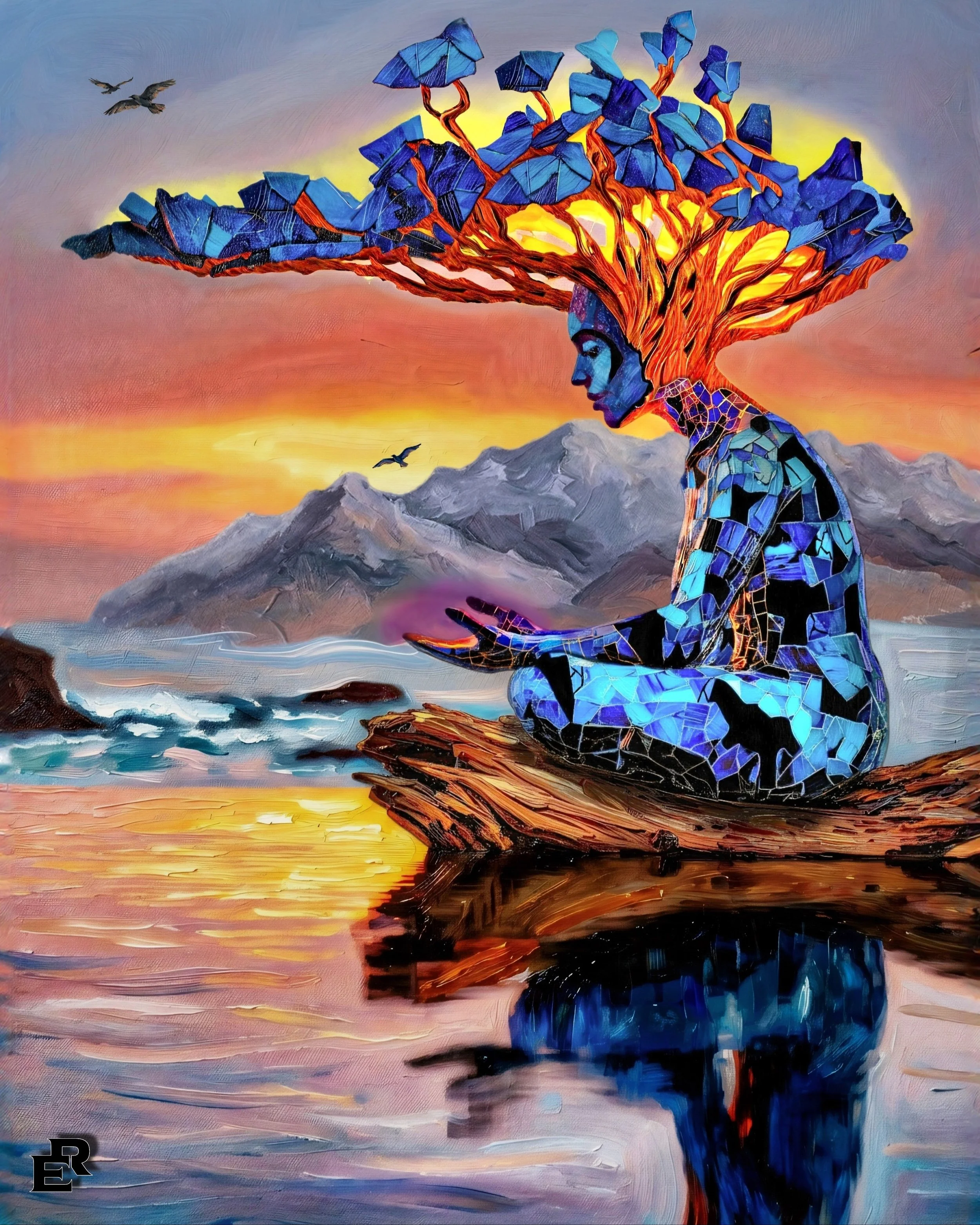
For decades, I searched to understand not only the life I was living, but life itself—how a human being can remain fully human in the presence of suffering, uncertainty, and loss.
Art became the most honest way I found to share that ongoing search, and the understanding that gradually emerged from it—with the hope that what helped me build love, gratitude, hope, and endurance in my own life may help others in theirs.
A glimpse into the process behind one artwork.
Every work begins long before the first brushstroke—with reflection, questioning, and the search for a visual language capable of expressing what words alone cannot.
Entering The BelliranER Experience
BelliranER is an experiential space where paintings, poetry, music, and reflection come together to invite people into a shared exploration of what it means to remain fully human.
Each work is part of a larger conversation.
Rather than presenting separate creations, BelliranER unfolds as an interconnected world where every medium reveals another way of approaching the same existential questions—through image, language, sound, and silence.
At its heart lies a simple belief:
That even in the presence of suffering, uncertainty, and loss, love, gratitude, hope, and understanding remain among the most profound expressions of what it means to be human.
You are warmly invited to enter, to reflect, and, perhaps, to discover a part of your own story within these works.