
This is not an escape from what we are.
It is the act of giving lived experience another language.
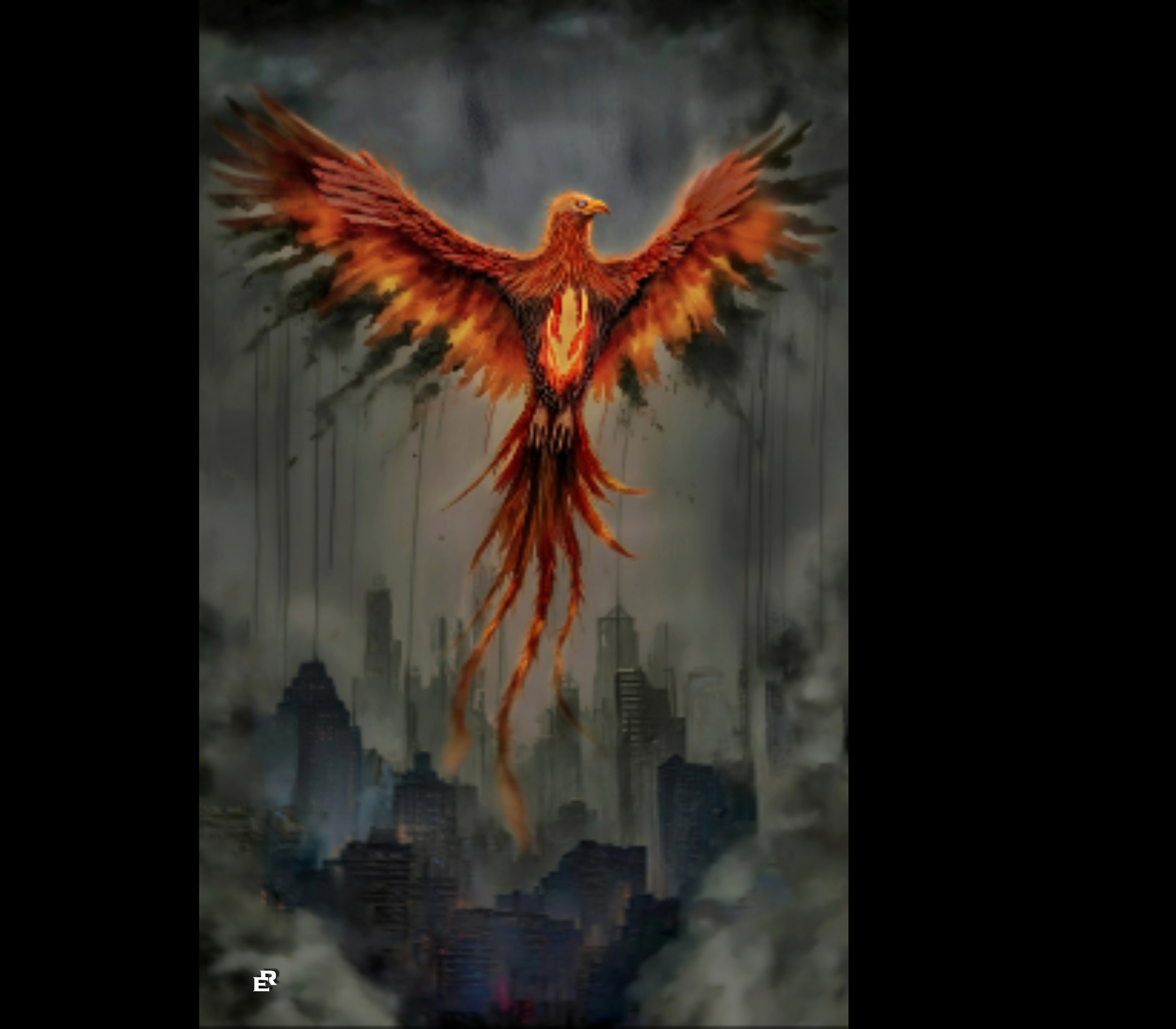
The Movement -
Poetic Existential Visualism
Core Principles
1. Duality of Existence
Life is not singular. There is the world that is lived, and the world that is carried within.
The body may remain — while the mind inhabits another space.
Poetic Existential Visualism explores this coexistence: presence and absence, movement and stillness, reality and memory.
2. Emotion Before Form
The artwork does not begin with technique.
It begins with emotion — often unresolved, often unspoken.
The visual composition is built only after the emotional truth is understood.
The image becomes a structure through which emotion is made visible.
3. The Poetic Layer
Each artwork is accompanied by text — not as explanation, but as a second dimension.
The poem, quote, or fragment does not describe the image.
It opens it.
It allows the viewer to enter the internal space in which the work was created.
4. Fracture as Language
Breakage is not an end — it is a form.
Cracks, distortions, and transformations are not symbols of collapse, but of continuity.
The fractured figure is not destroyed. It is in the process of becoming.
5. Time as Experience
Time is not linear.
Past and present coexist.
Memory is not behind us — it is within us.
The work reflects this — moments overlap, states merge, and reality is experienced as layered rather than sequential.
Definition
Poetic Existential Visualism is a visual and philosophical language that merges image and text into a unified emotional and conceptual experience. It emerges from lived experience — where memory, survival, and inner reflection are translated into symbolic visual forms, accompanied by poetic text that reveals the emotional state behind each work. Each piece is not only seen, but entered. Not only interpreted, but felt. This movement does not aim to represent reality as it appears, but as it is lived internally — fractured, layered, and often divided between multiple coexisting states.
Rather than seeking escape, Poetic Existential Visualism transforms lived experience into a place where others may recognize their own.
The Process
Every work begins in silence — in writing. Emotions are recorded, examined, and distilled into words. From these words, a poetic form emerges — a fragment of inner truth. Only then does the visual process begin. Some works emerge in a single continuous act. Others require distance, time, and the willingness to return. The process is not guided by speed, but by honesty.
The Human Axis
This movement is inseparable from lived experience. It is shaped by physical limitation, recovery, and the ongoing negotiation between the body and the self. It does not seek to escape suffering, but to transform it into meaning.
The movement does not emerge from suffering alone, but from the search for meaning, connection, and the possibility that lived experience—however fractured—may still become a source of presence for another person.
The work exists in the space between: endurance and vulnerability, weight and light, collapse and reconstruction.
Intention
Poetic Existential Visualism is not created for observation alone. It is an invitation. An invitation to recognize the unseen layers of one’s own existence — to confront, to reflect, and to find resonance within what is experienced.
The work does not ask the viewer to become someone else.
It invites them to discover that another path may still exist within their own experience.
If the viewer sees themselves within the work — even partially — then the work has fulfilled its purpose.
Closing Fragment
This is not a depiction of life. It is a translation of what it feels like to live. This is not an escape from reality. It is an encounter with it — as it exists within. This is not about perfection. It is about what remains, even after fracture. This is not a depiction of life. It is a translation of what it feels like to live. This is not an escape from reality. It is an encounter with it — as it exists within. This is not about perfection. It is about what remains, even after fracture.
Poetic Existential Visualism does not arrive at resolution.
It does not seek to restore what has been altered, nor to define what has been lost.
What remains is not always visible.
Not always nameable.
Not always stable.
Yet it persists.
Not as memory.
Not as identity.
But as something that cannot be removed — even when form changes, even when structure fractures, even when presence is diminished.
The work does not attempt to protect it.
It does not attempt to explain it.
It allows it to appear.
Poetic Existential Visualism is a way of understanding existence, shaped through lived experience and sustained reflection.
It is expressed through visual art, poetry, music, and writing—not as separate disciplines, but as different languages through which the same existential questions, values, and philosophy continue to speak.