
The Man Who Carried the Moon
BelliranER
The following text does not explain the work.
It reflects what shaped it.
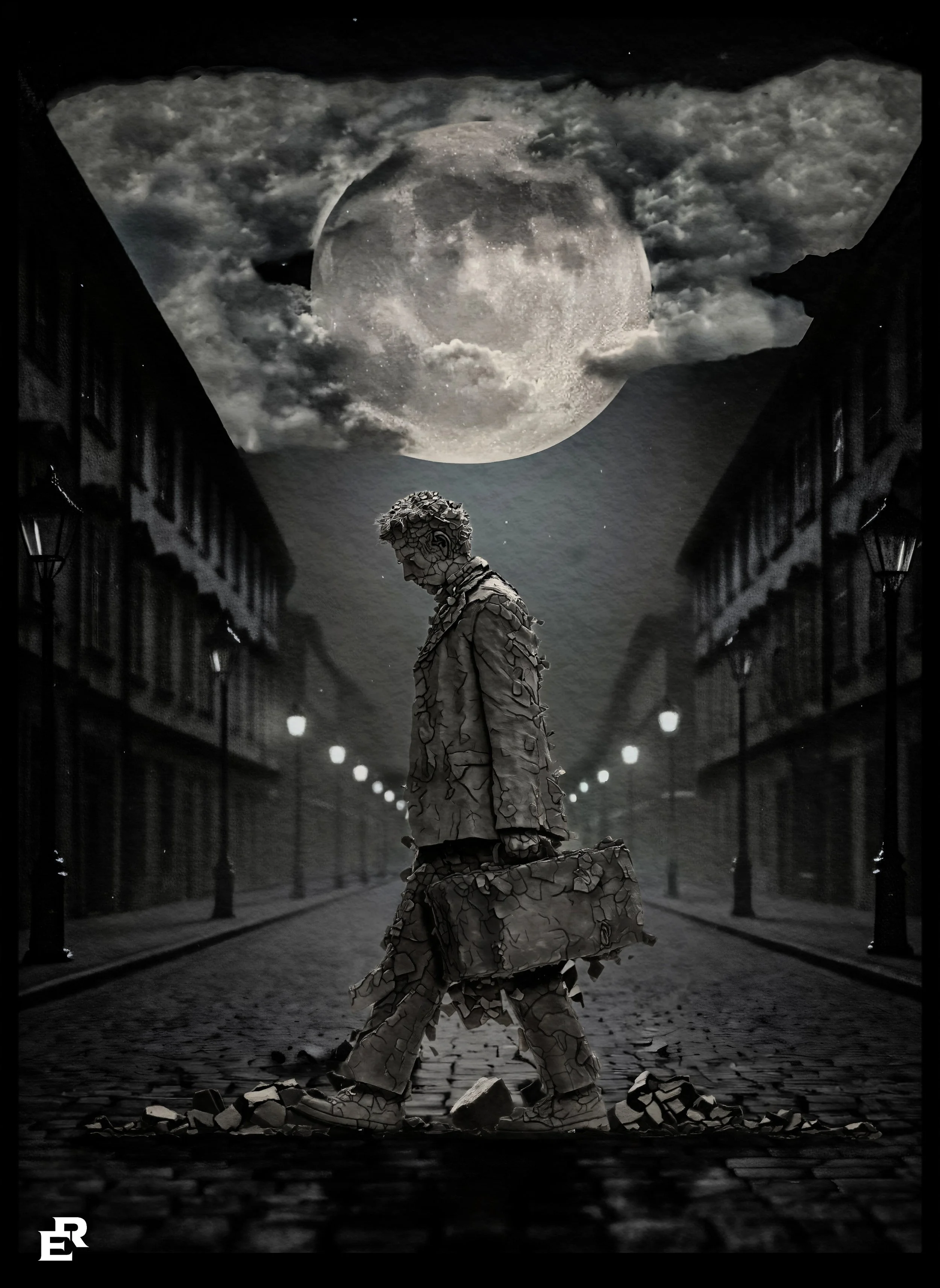
This work holds endurance not as escape, but as a way of continuing under weight.
The figure does not leave the darkness behind.
He carries it.
What once threatened to break him becomes part of his form — not transformed into ease, but into a kind of inner illumination.
The moon is not only burden.
It is memory, grief, survival, and the quiet light drawn from what could not be undone.
Here, gratitude does not appear as comfort.
It does not erase despair, nor soften what was carried.
It becomes an act of resistance.
A refusal to let darkness remain only darkness.
A refusal to let pain decide the final shape of the self.
And still, he moves.
Not untouched.
Not restored.
But led forward by the very weight that once tried to end him.
“The weight that once tried to break me
became the light that led me home.
I did not escape the darkness —
I learned to thank it.
Gratitude became my quiet rebellion against despair.”